Blog Archives
The Process of Writing Adventure Games
 When I first enrolled in college, my plan was to major in film production. That was until I discovered the computer and its power for creating interactive stories. So, you can understand why my favorite game genre is adventure games. I’ve designed and/or developed a number of adventure games throughout my career and I’ve approached their design through a number of ways.
Inspiration for a game can come from anywhere — personal experience, a topic of interest, a book or movie license, even a dream. But usually in the really of videogame development, you make the game you’re told to make.
The very first adventure game I designed (back in 1979) was based upon the British television show The Prisoner. The ideal way to design any genre of video game is to start with the player experience — determining how the player should feel while playing the game — and that’s how I began the design of this game. I wanted my game to recreate the same experience I had when watching the show: the experience of being in a menacingly-cheerful, surreal environment in which you were constantly monitored and controlled, where every opportunity was a deception and every move you made sent you back to square one, and yet by assertion your individuality and refusing to follow the rules, you could ultimately succeed.
I then invented game mechanics to create the game experience, and you can read in detail about how the gameplay works in the Wikipedia article about the game. The final step in the design process was to write the story exposition and dialog to support the both the play experience and game mechanics.

Another popular adventure game I designed and produced was I Have No Mouth, and I Must Scream. The game was based on Harlan Ellison’s classic short story about the last five human survivors of a world war waged by three computers from the world’s superpowers, and how the computers merged into one entity, AM, and tortured these poor unfortunates for eternity. We paired Harlan with a game writer, David Sears, who asked the question, “Why were these particular five people chosen?” and from there they created a new, vastly expanded version of the story that told the backstories of each of these people.
Once I had a story to work from, my next step was to find a game developer with a game engine suitable for developing an adventure game, and that lead me to hiring The Dreamers Guild to do the programming and artwork because they had created a suitable game engine for their game Faery Tale Adventure. I then created a series of puzzles that would unveil various pieces of the story and work with the mechanics of the game engine we were using, as well as expanding the dialog to provide hints for those puzzles. In fact, I wound up writing almost half the game’s dialog myself to support the game’s puzzles, and since my infant son was undergoing chemotherapy at the time (he’s fine now), I had no problem putting myself into a sufficiently black mood for writing dialog to match the nightmarish scenario.

The most recent adventure game I designed (in 2012) was for a client who simply told me, “I want a game about the prophesied end of the world in 2013.” The client wanted to use a game engine similar to some mystery games he directed me to on the web, and so I decided to start by writing a story about a teenage girl whose father, a pilot, went missing in the Bermuda triangle and her investigation to find out what happened to him leaders her to archeological sites throughout the world, where she discovers artifacts that will allow her to thwart and alien invasion that was prophesied to occur on December 21, 2013.
I collected lots of photographs of the places that our heroine would visit and researched the ancient civilizations whose artifacts she would uncover, and that inspired me to create the details of the world and the puzzles that needed to be solved. Unfortunately after I handed my game design off to the client, someone decided to turn my Amelia Earhart-inspired heroine into a bubbly tourist just looking for some fun in the sun while in Bermuda, but that’s the way game development goes sometimes — just as in movies, the writer doesn’t always have final say! I’ve never looked at the final version myself, but if you are interested, you can download it here.

In conclusion, I’ve written adventure games beginning either with the player experience, the story, or with the game engine or mechanics as my starting point. While I prefer beginning by defining the player experience, it is critical to have all three elements support each other regardless of the starting point, as should the puzzles and dialog.
How Video Game Music Is Produced
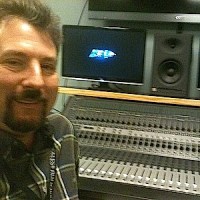 There a many articles about video game art, but one should never underestimate the role the music plays in a game’s aesthetic experience. It is an essential element for immersing the player in the game world and is perhaps the most powerful tool a game developer has for evoking the emotions that the game designer wants the player to feel at various points in the game.
Whenever I’m in need of original music for a game I’m producing, I consult my “Rolodex” to find a music professional who specializes in video game music. Like many other game producers, I tend to work with people I’ve had great experiences with previously, like Rob King, who produced all of the music for the Heroes of Might & Magic series. Rob is a full-service audio guy, who can handle my music, sound effects, and voice-over needs. He works with a number of professional voice-over actors and musicians who he can bring into the studio to record.
Occasionally, I’ll have the opportunity to work with a composer from the film industry. My manager at Cyberdreams introduced me to John Ottman just before he became famous for being the editor and composer for all of director Brian Singer’s films. I hired John to compose the soundtrack for I Have No Mouth, And I Must Scream, and he whipped up about a dozen pieces of terrific music that he recorded on his synthesizer, while also composing and editing Singer’s film The Usual Suspects.
Because we game producers tend to use the same audio experts over and over, it is really tough for new people to break into the field. However, it does happen. A couple of years ago, I went to an International Game Developers Association meeting, and an aspiring young game producer gave me her card. When I got home that night, I decided to go to her website and listen to her portfolio samples, and I was blown away by how good her music was. I tried to hire her for my next project, but she had already been hired away by a big studio.
Sometimes when I’m working on a game with a very tight budget, I’ll license pre-recorded music from a sound library. Whether searching through music libraries for pieces I want to license or hiring a composer to write new music, I meed to first determine what style of music I want to have in my game, and the mood I would like each piece to convey.
At minimum, I want there to be three tracks in my game:
- Main Theme: A track that becomes identifiable with my game that I would have play over the game titles and possible over the menu screens and end credits.
- Low Key: A track to be used in low tension periods of the game, such as exploration. (In a higher-budget games, I may have a number of these created. For example, I might have separate exploration music for each type of environment or level in my game).
- Intense: A track for a dramatic period in my game, such as combat. Again, for a higher-budget game, I might license or commission several of these pieces.
What differentiates creating a soundtrack for a video game than one for a film or television show and what creates the biggest challenge is that the composer does not know how long each of these sequences need to play. It all depends on the player’s interactions with the game. Therefore, each piece needs to be loopable so that it can play repeatedly until a new sequence of the game begins.
There may be other musical pieces required for the game:
- Fanfares: Short, non-looping pieces used to signal success.
- Defeat: Short, non-looping pieces used to underscore a loss.
- Stings: Very short, non-looping music used to dramatize surprise, threat or humor.
- Cut Scene: Music used to dramatize the actions in a canned animated sequence. Scoring cut scenes is very much like scoring a film or television show.
Another piece of information I need to provide is what format I would like the music to be delivered in, such as MIDI or WAV. For WAV files, I need to specify the sample rate (the higher the sample rate, the better-sounding the music but the larger the music file) and whether it should be mono or stereo. I always make these specifications in consultation with my technical director.
As with many things in game development, success is all in the planning and picking the right person to work with. Most of the time, I simply plug in the music that is delivered to me and I’m delighted with the results.






 David Mullich