Blog Archives
Immersion: It’s All in the Details

One of the advantages of working from a home office is that my schedule is very flexible. My wife and I had been trying to talk the kids into going to Disneyland for the past couple of months, but they are at an age where it just isn’t that exciting to them anymore. Since we couldn’t use our annual Disneyland passes again for another two months (most of the summer is blacked out for pass holders), the two of us decided to take the afternoon off and drive out to The Happiest Place On Earth, leaving the kids perfectly content to remain at home and play Minecraft.
I love Disneyland. My family used to make annual pilgrimages to Disneyland several times a year, and as an adult, I try to visit at least twice a year. (When I worked at Disney Computer Software, I had a Silver Pass that allowed me unlimited free visits to Disneyland, and I would go to the park about once a month).
What has always made Disneyland special to me is what a meticulous job it does transporting visitors somewhere else — a river cruise through exotic rainforests, a crazy ride through Roger Rabbit’s Toontown, a spaceflight to the forest moon of Endor. The illusion is complete enough that we are able to suspend disbelief and get into the spirit of pretending that we are really there. How is the illusion created? Through total immersion, right down to the smallest detail. The staff (or “cast members” as they are called) are all wearing costumes styled for the attraction in which they work, the building fixtures are themed appropriately, and even the trashcans are decorated so that they fit into Frontierland, Tomorrowland or whichever land they are placed.
I try to do something similar with the games I develop. When I produced Rendezvous: A Space Shuttle Flight Simulation, I directed that the message “Program Loading” be changed to “Rolling Vehicle Onto Launchpad.” For DuckTales: The Quest for Gold, I wrote the player manual so that it took the form of a “Junior Woodchuck Guide.” When planning the quests for Heroes of Might and Magic III, I instructed the writers to make references to the storylines of both the Heroes and Might and Magic franchises, and stay away from corny references to geek-culture found in previous games in the franchises.
Immersion is one of the reasons why players play games. Immersion, when properly done, appeals to our desire for novelty through new and imaginative experience. Although not every player has this desire to a great degree, many types of players do. Game designer Richard Bartle classified MUD (Multi-user dungeon) players into four types: Killers, Achievers, Socializers, and Explorers. Explorers like to explore the world, right down to its finer details. Such details also appeal to to the gamification player type that Victor Manrique classifies as an Enjoyer: players who are motivated by positive emotions such as joy, curiosity, inspiration, mystery and awe.
However, even a tiny detail that is out of place can jar the player out of the immersive experience. Have you ever seen a movie scene in which a spy agency is trying to trick a captive into thinking he was safe somewhere else, only to be made aware that he is being tricked due to a radio playing a sports broadcast from the wrong year or a clock chiming for the wrong time zone? The same thing can happen in games, where an incorrect detail can cause the player to no longer be captivated by your game.
How Video Game Music Is Produced
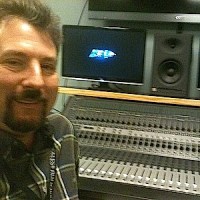 There a many articles about video game art, but one should never underestimate the role the music plays in a game’s aesthetic experience. It is an essential element for immersing the player in the game world and is perhaps the most powerful tool a game developer has for evoking the emotions that the game designer wants the player to feel at various points in the game.
Whenever I’m in need of original music for a game I’m producing, I consult my “Rolodex” to find a music professional who specializes in video game music. Like many other game producers, I tend to work with people I’ve had great experiences with previously, like Rob King, who produced all of the music for the Heroes of Might & Magic series. Rob is a full-service audio guy, who can handle my music, sound effects, and voice-over needs. He works with a number of professional voice-over actors and musicians who he can bring into the studio to record.
Occasionally, I’ll have the opportunity to work with a composer from the film industry. My manager at Cyberdreams introduced me to John Ottman just before he became famous for being the editor and composer for all of director Brian Singer’s films. I hired John to compose the soundtrack for I Have No Mouth, And I Must Scream, and he whipped up about a dozen pieces of terrific music that he recorded on his synthesizer, while also composing and editing Singer’s film The Usual Suspects.
Because we game producers tend to use the same audio experts over and over, it is really tough for new people to break into the field. However, it does happen. A couple of years ago, I went to an International Game Developers Association meeting, and an aspiring young game producer gave me her card. When I got home that night, I decided to go to her website and listen to her portfolio samples, and I was blown away by how good her music was. I tried to hire her for my next project, but she had already been hired away by a big studio.
Sometimes when I’m working on a game with a very tight budget, I’ll license pre-recorded music from a sound library. Whether searching through music libraries for pieces I want to license or hiring a composer to write new music, I meed to first determine what style of music I want to have in my game, and the mood I would like each piece to convey.
At minimum, I want there to be three tracks in my game:
- Main Theme: A track that becomes identifiable with my game that I would have play over the game titles and possible over the menu screens and end credits.
- Low Key: A track to be used in low tension periods of the game, such as exploration. (In a higher-budget games, I may have a number of these created. For example, I might have separate exploration music for each type of environment or level in my game).
- Intense: A track for a dramatic period in my game, such as combat. Again, for a higher-budget game, I might license or commission several of these pieces.
What differentiates creating a soundtrack for a video game than one for a film or television show and what creates the biggest challenge is that the composer does not know how long each of these sequences need to play. It all depends on the player’s interactions with the game. Therefore, each piece needs to be loopable so that it can play repeatedly until a new sequence of the game begins.
There may be other musical pieces required for the game:
- Fanfares: Short, non-looping pieces used to signal success.
- Defeat: Short, non-looping pieces used to underscore a loss.
- Stings: Very short, non-looping music used to dramatize surprise, threat or humor.
- Cut Scene: Music used to dramatize the actions in a canned animated sequence. Scoring cut scenes is very much like scoring a film or television show.
Another piece of information I need to provide is what format I would like the music to be delivered in, such as MIDI or WAV. For WAV files, I need to specify the sample rate (the higher the sample rate, the better-sounding the music but the larger the music file) and whether it should be mono or stereo. I always make these specifications in consultation with my technical director.
As with many things in game development, success is all in the planning and picking the right person to work with. Most of the time, I simply plug in the music that is delivered to me and I’m delighted with the results.






 David Mullich