Category Archives: Game Design
Episodic Game Levels As DLC
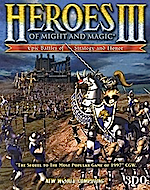 A Quora user asked me how feasible it was to release episodic game levels as downloadable content every six months.
We actually did that with the Heroes of Might & Magic series. Following the release of HOMM3 and its two expansion packs, we released a series called “Heroes Chronicles”, a series of 8 story-themed campaigns over the span of a year. The concept behind Heroes Chronicles was to create a series of low-budget, low-priced titles to generate sales revenue between the big releases.
I don’t recall how well the experiment went from a financial perspective, but looking back, one problem I see was that the product-cycle for games are so short-lived, customers with tight budgets only have to wait a few months after a AAA game is released to buy it for a much-reduced price at the bargain bin. Plus, now with so many independent developers, there are many low-priced original games available, that titles that are merely episodic levels just aren’t that attractive to game consumers.
How Do Game Designers Miss The Flaws In Their Games?
 One of my Game Design students was complaining to his classmate about frustrations with a game he was playing. As I approached, he turned to me and said, “How is it that the game designer could not see the flaw in the game he was playing when it was so OBVIOUS?”
Well, I replied, t is very difficult to see the flaws in one’s own work, especially when you’ve worked on it for a long time. You begin to accept all the little details as givens, and you don’t see the trees for the forest. This is why writers need editors and game designers need play testers.
Even then, such things are subjective. What is a flaw to one person is a design choice to another. Many design choices are trade-offs, because adjusting a “flaw” in one design element may reveal an even bigger problem in another. There also may be technical limitations of the game engine or other software component that make the flaw difficult to fix.
Also, there is the limitation of time. A flaw may not appear or become obvious until the entire game comes together, and by then, it may be too late (or too expensive, if many other resources need to be involved to fix the flaw).
A good designer will playtest his or her game with other players early and often, allowing problems to be spotted and resolved before they become too ingrained in the game to be eliminated. However, different types of players have different ways of playing and having fun, so there will always be those players who disagree with a design choice that the game designer makes.






 David Mullich