Author Archives: David Mullich
What Was The First Video Game Company?
 Every month the Los Angeles Film School runs an Open House for potential students. Although all of our in instructors have accomplished backgrounds, I am the one who gives the presentation on our Game Production Program, because, well, I’ve been lucky enough to have the most colorful career, and we think it’s interesting for folks to hear about the company’s I’ve worked at and games I made. So, I begin my presentation with, “I teach classes on game design, game development, game publishing, the impact of games on society, as well as the history of games. Let my tell you a little about my own history…”
Last Saturday at the Info Fair we hold after all the presentations, one of the adults who sat in on my presentation came up to me and said, “So, you know about game history. Tell me, what was the first video game company?”
Now that’s an interesting question, because that leads us to also ask “What is a video game company?” and “what is a video game?”
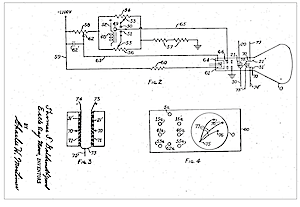
The earliest known electronic game was a missile simulator using analog circuitry and a cathode ray tube developed by Thomas T. Goldsmith and Estle Ray Mann developed in 1947. The player turns a control knob to position the CRT beam on the screen. To the player, the beam appears as a dot, which represents a reticle or scope. The player has a restricted amount of time in which to maneuver the dot so that it overlaps an airplane, and then to fire at the airplane by pressing a button. If the beam’s gun falls within the predefined mechanical coordinates of a target when the user presses the button, then the CRT beam defocuses, simulating an explosion. Goldsmith and Mann filed the patent for their invention, dubbed the Cathode Ray Tube Amusement device, in 1948. The device had no computer, memory, or programming, and some do not consider it a true video game.

The first computer game to display visuals on an actual computer monitor was a version of Tic-tac-toe called OXO. To play OXO, the player would enter input using a rotary telephone controller, and output was displayed on the computer’s 35×16 dot matrix cathode ray tube. The game was developed by Alexander S. Douglas for the Electronic Delay Storage Automatic Calculator (EDSAC) computer, which was located at the at the University of Cambridge Mathematical Laboratory in England. However, this game was not sold commercially.

The credit for being the first company to commercially sell a video game of any kind goes to Nutting Associates, which sold a coin-operated video called game Computer Space in August 1971. It was created by Nolan Bushnell and Ted Dabney, who would go on to form the historic video game company Atari, creators of Pong and Asteroid, the following year. Unfortunately, the Computer Space was a failure, and Nutting Associates, which had opened as an arcade game manufacturer in 1965, went out of business in 1976.
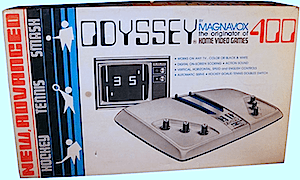
Credit for manufacturing and selling the first very first video game console system goes to electronics company Magnavox. Shortly after its launch in 1917, Magnavox became a major consumer electronics and defense company. It manufactured radios, record players, and eventually televisions. In around 1970, the Magnavox was approached by another electronics company, Sanders Associates, because one of its employees, Ralph Baer, had developed a prototype of a device that could play a number of electronic games on an ordinary television set. Sanders licensed the technology to Magnavox, who sold over 330,000 units of what was called the Magnavox Odyssey, including one to the Mullich family. The system and its games were so popular it triggered the beginning of the home video game console market. (Console inventor Baer, who passed away last month at the age of 92, is now called “the father of video games” and was awarded the National Medal of Technology in 2004.)
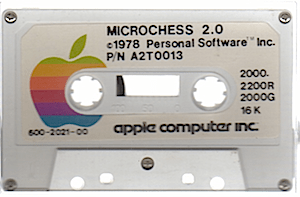
So who was the first video game publisher, independent of a hardware manufacturer? Well, no one can say who was the first personal computer game publisher was, since so many people (such as me while I was in college) could make copies of games they programmed on their home computers and sell them through their local computer retailer. One early contender would be Personal Software, which was founded in 1976 and published the game Microchess that same year. However, the company was not known as a video game publisher as its biggest title was the very first spreadsheet program VisiCalc, which became so successful that the company was renamed VisiCorp in 1982.

Another early video game publisher was Epyx. Founded in November 1978 as Automated Simulations, the company marketed its first title, Starfleet Orion, the following month. After releasing a number of successful action games under the brand Epyx, the company changed its name to its brand name in 1983. In 1989, Epyx discontinued developing computer games, began making only console games, and filed for Chapter 11 bankruptcy protection. The company became defunct in 1993.
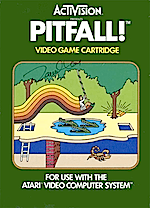
The first independent developer and distributor of video games for gaming consoles was Activision. It was formed in 1979 after a group of game designers at Atari were denied their request for royalties and credit for the games they developed. Dismissed by Atari CEO Ray Kassar as being nothing more than “towel designers”, programmers David Crane, Larry Kaplan, Alan Miller, and Bob Whitehead quit and formed their own company, Activision. Thirty-five years later, Activision remains one of the largest game publishers, with assets of over $14 billion in 2013.
So, which is the first video game company? I’d give that claim to Nuttig Associates, although you could say Sanders Associates, Magnavox, or various other companies, depending upon whether whether you are referring to hardware or software, licensing or selling.
BSA Game Design Merit Badge Project: The Weeping Angels
 Last weekend a boy scout named Richard came to my home for my help in finishing up the requirements for the Game Design merit badge. He had started work on the requirements while at summer camp and had gotten as far as playtesting his game concept, but he needed me to sign off on the final analysis he wrote up in his game design notebook.
Being a Doctor Who fan, I was delighted by his premise: a game of tag based on one of the most popular Who episodes of all time, “Blink“. In the episode, the Doctor (an alien Timelord who travels through time using a device called a TARDIS) and his companion come to the aid of a young woman who is threatened by The Weeping Angels, a race of predatory creatures that resemble stone statues of angels. The Angels remain motionless so long as you are looking at the, but if you turn away or even blink, they will quickly and silently attack.

Here is the game that Richard designed:
Premise: The Weeping Angels is an outdoor game to be played at night in a dark area by a group of at least three players using flashlights. Each player assumes one of three roles: Companion, Angel or Timelord. The Angels are the antagonists, who try to tag other players. The Companions are the protagonists, and must survive being tagged but can stun the Angels with their flashlights. The Timelord is the hero: he can heal Companions with his sonic screwdriver (flashlight).
Set-Up: This outdoor nighttime game is played by a group of at least three players. One player assumes the role of the Timelord and the remaining players split into two teams, the Companions and the Angels. The Companions get flashlights, the Angeles do not. Each team goes to opposite ends of the playing area, with the Doctor joining the Companions.
Progression: Each side advances toward each other and try to tag a member of the other team. If that player is tagged.
- Companions: Companions who shine their flashlight on an Angel stun the Angel; that Angel must remain motionless and begin counting down, out loud, from 50. After 50-second count-down, the Companion must turn off their flashlight for at least 10 seconds.
- Angels: Angels, when they are not stunned, attempt to tag the Companions and Timelords to turn them into Angels. The tagged player then plays the game as an Angel unless healed by the Timelord.
- Time Lord: When the Timelord shines his flashlight on a Companion player who has been turned into an Angel, the Angel player counts down aloud from 30, at which point the player becomes a Companion again. The Timelord may do this only 3 times.
Scouts pursuing this merit badge learn that game design is an iterative process, and this game was no exception. In the first iteration of the game, Richard originally gave the Companions the ability to stun an Angel without turning the light off afterwards. However, he found that the Companions would use the strategy of getting together in a big group and sitting together in a corner, shining the light on a passerby. This gave the Companions too much of an advantage.
The original version of the game did not have a Timelord. Richard first gave the Timelord the ability to heal any Companion player that had been turned into an Angel and turn them back into a Companion (however, the Timelord cannot turn a player who started an Angel into a Companion). The healing time was originally 50 seconds, but Richard found that the game worked better when the healing time was reduced to 30 seconds. He then gave the Timelord a limit of three times to heal the other player, and that was the final revision Richard made to the Timelord rules.
The last rule that Richard added was another objective. The goal was for the Timelord to escort the Companions to the TARDIS; however, the TARDIS had only room for three Companions and the Timelord. While the game was playable with this objective, Richard’s play testers reported that they liked the version with the Timelord and regeneration, but not the version with the TARDIS. So, Richard removed the TARDIS from the final rule set, because game design is all about creating fun experiences for other people, not just for the designer.
If you play this game with a group of friends, I’d love to hear how you liked it.
Just remember:






 David Mullich