Author Archives: David Mullich
Jetting Back into the Job Market

I was laid off from my job at Jet Morgan Games on Friday. That’s all right. Things never quite worked out at Jet Morgan the way I hoped, and it was time to move on.
I didn’t waste time lamenting my situation. Instead, I sprang into action as soon as I came up and didn’t let up through the weekend.
Here were the steps I took to get myself back into the job market:
- Filed for unemployment insurance. I did this online, so that there would be minimal delay in receiving my unemployment benefits. There is always some delay, as the agency checks to make sure that the termination qualifies for benefits.
- Updated my resume. This included not only listing my most recent job, but also rewording some of my responsibilities and accomplishments in previous positions still sounded relevant.
- Emailed a copy of my resume to the in-house recruiters for every significant game publisher and developer in my area. Over the years, I’ve made sure to connect with all the local staff recruiters, at Activision, Disney, EA, etc. through LinkedIn, just so I would have their contact information should I need their services, which now I do.
- Emailed every close friend and manager I knew in the game industry and asked them if they were aware of any job leads they could pass on to me. Some have already responded by saying they knew of some possibilities and wanted a copy of my resume.
- Posted my availability for new work on Facebook, LinkedIn, Google Plus, etc.
- Went to the job boards of all the big local companies and posted my resume and set myself up for job alerts for positions I in which I might be interested.
- Lastly, I contacted my favorite executive recruiters and let them know that I was looking for work. I’ve never gotten a job through a recruiter before — it’s all been by employee referrals or my direct contact with the company — but you never know. I use recruiters to find opportunities that are, for whatever reason, are hard to find myself
Job hunting can be even more exhausting work than job-doing. How quickly will my efforts pay off? You’ll be among the first to know!
How Video Game Music Is Produced
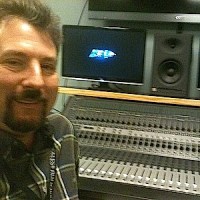 There a many articles about video game art, but one should never underestimate the role the music plays in a game’s aesthetic experience. It is an essential element for immersing the player in the game world and is perhaps the most powerful tool a game developer has for evoking the emotions that the game designer wants the player to feel at various points in the game.
Whenever I’m in need of original music for a game I’m producing, I consult my “Rolodex” to find a music professional who specializes in video game music. Like many other game producers, I tend to work with people I’ve had great experiences with previously, like Rob King, who produced all of the music for the Heroes of Might & Magic series. Rob is a full-service audio guy, who can handle my music, sound effects, and voice-over needs. He works with a number of professional voice-over actors and musicians who he can bring into the studio to record.
Occasionally, I’ll have the opportunity to work with a composer from the film industry. My manager at Cyberdreams introduced me to John Ottman just before he became famous for being the editor and composer for all of director Brian Singer’s films. I hired John to compose the soundtrack for I Have No Mouth, And I Must Scream, and he whipped up about a dozen pieces of terrific music that he recorded on his synthesizer, while also composing and editing Singer’s film The Usual Suspects.
Because we game producers tend to use the same audio experts over and over, it is really tough for new people to break into the field. However, it does happen. A couple of years ago, I went to an International Game Developers Association meeting, and an aspiring young game producer gave me her card. When I got home that night, I decided to go to her website and listen to her portfolio samples, and I was blown away by how good her music was. I tried to hire her for my next project, but she had already been hired away by a big studio.
Sometimes when I’m working on a game with a very tight budget, I’ll license pre-recorded music from a sound library. Whether searching through music libraries for pieces I want to license or hiring a composer to write new music, I meed to first determine what style of music I want to have in my game, and the mood I would like each piece to convey.
At minimum, I want there to be three tracks in my game:
- Main Theme: A track that becomes identifiable with my game that I would have play over the game titles and possible over the menu screens and end credits.
- Low Key: A track to be used in low tension periods of the game, such as exploration. (In a higher-budget games, I may have a number of these created. For example, I might have separate exploration music for each type of environment or level in my game).
- Intense: A track for a dramatic period in my game, such as combat. Again, for a higher-budget game, I might license or commission several of these pieces.
What differentiates creating a soundtrack for a video game than one for a film or television show and what creates the biggest challenge is that the composer does not know how long each of these sequences need to play. It all depends on the player’s interactions with the game. Therefore, each piece needs to be loopable so that it can play repeatedly until a new sequence of the game begins.
There may be other musical pieces required for the game:
- Fanfares: Short, non-looping pieces used to signal success.
- Defeat: Short, non-looping pieces used to underscore a loss.
- Stings: Very short, non-looping music used to dramatize surprise, threat or humor.
- Cut Scene: Music used to dramatize the actions in a canned animated sequence. Scoring cut scenes is very much like scoring a film or television show.
Another piece of information I need to provide is what format I would like the music to be delivered in, such as MIDI or WAV. For WAV files, I need to specify the sample rate (the higher the sample rate, the better-sounding the music but the larger the music file) and whether it should be mono or stereo. I always make these specifications in consultation with my technical director.
As with many things in game development, success is all in the planning and picking the right person to work with. Most of the time, I simply plug in the music that is delivered to me and I’m delighted with the results.






 David Mullich