Category Archives: Game Production
Should You Start Your Own Game Studio?
 This morning a young man contacted me to get advice about starting his own game development studio. As is usually the case when I listen to requests like this, the man knew nothing about game development and nothing about running a business. What he had was an Idea, which is better than some people who just like the idea of having their own game studio but don’t even know what kind of game they would like to make.
To get the conversation going, the first question I ask people looking for my advice is, “Do you want to make a game, or do you want to make a business?” That’s an important distinction because most games are not successful. You have to may have to make several games before you have any hopes of making a profit. So, unless you are just making a game to scratch an item off your bucket list, you need to plan for the long haul and come up with a plan that will sustain you until you have a legitimate business going.
The first step in setting up a company is to do some research to find out how the game industry works, especially if you haven’t worked in it before. Visit the game industry website Gamasutra every day to read stories on the success and failure of other companies, follow movers and shakers on social media, visit retail and online stores to learn about sales and distribution, and attend industry-related meetings, conferences, and trade shows.
Next, you need to come up with a plan. A business plan. One way to get started is to follow this commonly used template for a business model.
Customer Segments
Who are your customers and what are they looking for in a game? If you say you are making your game “for everyone”, then you don’t understand your customers, because game players are not a homogenous group. Typical demographics used to target players for a particular game include age, gender, favorite genre, skill level, preferred play session length and income level (which may be a constraint on how much they can afford to pay for your game).
Value Proposition
How will you satisfy your customer’s entertainment needs with your particular game? Players play games for many different reasons: to be challenged, to chill out for a while, to participate in a story, to learn new things, for excitement, for mental stimulation. Once you determine how your game provides entertainment, then you need to figure out what will make your game special. There are thousands of games on the market place, so what makes your game sufficiently compelling and different that people will want to play yours?
Key Resources
What resources are required to maintain your business model? In the game industry, your key resources are you development team — the designers, programmers, artists and audio specialists who are making the game. Unless you are using your first game as a training exercise for them, you will need to find experienced developers. You should also hire a lawyer to establish your studio as a legitimate business and to provide legal advice on contracts. It is also a good idea to hire an accountant or business consultant to manage your financials. If your studio is more than a few people, you may also need an office manager and/or a human resources professional. Then there’s marketing and sales to consider. Once your game is a few months away from its launch date, marketing can easily take up 25% or more of your time — do you want to handle that yourself, or at least hire a marketing consultant?
Key Activities
What activities are required to build the business? For this, you need to bring your development and marketing staff together to figure out all the steps required to make and market your game. Get them into a room and spend a few days hammering out an initial task list and schedule. Rely on their expertise for telling you what the key activities are, although you can set priorities, goals and deadlines (that your staff agrees are doable).
Cost Structure
What are the costs for developing and marketing your game? The main costs of developing a game are the salaries of your game developers (you were planning to pay them, weren’t you?), but there’s also equipment, furniture, supplies, office rental, electricity, telephone, internet, legal fees, insurance, and all the million other things involved in running any business. You should also set aside a budget for marketing your game.
Channels
How will you find your customers and promote your game to them? Channels for promoting your game include advertising, public relations (press releases, reviews, publicity stunts), and social media (Facebook, Twitter, YouTube, etc.) Then, how will you deliver the game to them — through a retail store, via mail order, or via digital distribution?
Strategic Partners
What partners are needed to maintain your business model? Distribution is the area where most game studios need to find a business partner. If you are planning to distribute your game through retail stores, then you are going to have to enter into a distribution relationship with an established publisher like Electronic Arts or Sony Computer Entertainment. In addition to distribution, publishers can provide you with marketing assistance, the benefit of their experience in developing other games, and perhaps most importantly, financing of your development costs. However, there is a price for that: they will also take a significant portion of the sales revenues as well as exercise creative control over the game.
Customer Relations
How will you attract, convert and retain customers? A marketing and public relations strategy can attract players, and a well-crafted value proposition can convert them to paying customers, but maintaining their loyalty involves community management and technical support programs that shows you are paying attention to them and responding to any problems they are experiencing.
Revenue Stream
How many potential paying customers are there, and how will you earn revenue from them? Many games are a single purchase, but some have a monthly subscription, sell virtual goods, or host paid advertising. As part of your initial research, you should look at how your competitors are making money from their game and how large their customer base appears to be.
That’s the beginning of a plan, but a plan needs funding if it’s going to become a reality. So, how are you going to fund your business? Do you have a relationship with any angel investors or venture capitalists, have you secured a bank loan, are your reinvesting profits from another of your businesses, or is your Great Aunt Edna willing to give you your inheritance early? Because unless you have some money to actually pay people to turn your idea into a product, that’s all the advice I’m going to give you for today!
Using Fictional Characters Without Permission Is A Real Problem
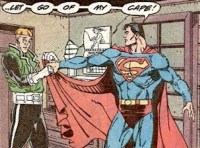 There always is a lot of confusion among the general public about the nature of copyright infringement and whether it is legal to create your own works, whether it be commercial products or fan fiction, based on other people’s works. One person recently asked me what the penalties were for plagiarising fictional characters. Although I’ve written about the topic of intellectual property rights before, I thought I would share my answer with my other readers.
Copyright infringement is the use of works protected by copyright law without permission, infringing certain exclusive rights granted to the copyright holder, such as the right to reproduce, distribute, display or perform the protected work, or to make derivative works.
Literary, artistic, and musical works — including books, comic books, video games, films, television shows, cartoons, and songs – are eligible for copyright protection. So is any written work (such as a character description) that is sufficiently original and substantial.
If you were to write your own story or make a video game about Superman character, for example, it would be considered to be a derivative work of DC Comic’s Superman comic books. If you publicly distributed such a derivative work without DC Comic’s permission, it would be copyright infringement.
In the United States, the penalties for copyright infringement are:
- Infringer pays the actual dollar amount of damages and profits.
- Infringer pays statutory damages ranging from $200 (accidental infringement) to $150,000 (intentional infringement) for each work infringed.
- Infringer pays for all attorneys fees and court costs.
- The Court can issue an injunction to stop the infringing acts.
Names alone are not substantial enough to be considered literary works and therefore are not eligible for copyright protection. You are free to name your baby “Superman” if you wish. Similarly, Joe Croce is allowed to have the lyrics “you don’t tug on superman’s cape” in his song You Don’t Mess Around With Jim, as it is only a reference to the Superman character.
However, the words comprising names can be registered as trademarks used to represent a company or product. For example, one of the many trademarks DC Comic has registered for the word “Superman” is for confectionary products (USPTO trademark serial number 7578832).
Trademark infringement involves using someone else’s trademark without permission on competing or related goods and services in such a way that it causes a likelihood of confusion in the average consumer. If you were to use the word “Superman” without permission on the packaging of candy that you were selling, you would be infringing on DC Comic’s trademark 7578832.
A trademark violator who is sued by the owner of a lawfully registered trademark in the United States may be ordered to pay monetary damages based on lost profits calculated from the sales the trademark violator made while using the trademark illegally. If the court finds that the trademark violation was intentional, such as a case in which the violator is selling goods that he is trying to pass off as coming from a known popular brand, the court may impose penalties of three times the amount of actual lost profits.
Ideas are not protected by intellectual property laws. For example, the idea of a cape-wearing, flying, invincible superhero who comes from an alien planet is not protected, and so you are perfectly free to create your own cape-wearing, flying, invincible superhero who comes from an alien planet. However, if you add on enough details that are similar to the Superman character (similar outfit, his planet is named Krypton, works as a reporter for The Daily Planet newspaper, etc) that the average person would confuse your character with DC Comic’s Superman character, you would be committing copyright infringement.
Plagiarism is taking someone else’s work or ideas and passing them off as one’s own. Plagiarism is not a crime; however, when committing plagiarism, many people also commit copyright infringement, which is a crime.
Also, crediting someone’s work that you use without their permission does protect you from committing plagiarism, but it does not protect you from committing copyright infringement. If you were to post your own story about or drawing of Superman on the internet with the disclaimer “Superman is a character owned by DC Comics. No copyright infringement is intended”, DC Comics could still successfully sue you for copyright infringement.
Now, you’ve probably noted that I did use an image from a Superman comic book to illustrate this article. However, there are certain limited Fair Use exceptions to using copyrighted works without permission, such as criticism, news, an parody — so long as you only use enough of the work as is necessary for your purpose and your use does not deprive the copyright holder of any potential revenue or market for that work (you can also use characters for which the copyright period has lapsed or are otherwise in the public domain). I think that my use is Fair Use for my purpose of educating my readers about intellectual property laws. Besides, I don’t think DC Comics would object on me telling people not to “tug on Superman’s cape” with out their permission.





 David Mullich