Category Archives: Game Education
What To Consider Before Getting A Game Degree
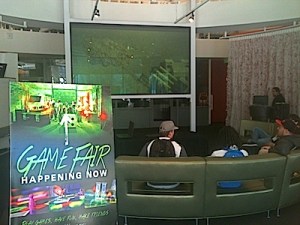 Recently I was approached by a local community college looking for instructors to teach students earning an Associates Degree in Game Development, and just last week my wife, a high school teacher, told me that her school was very interested in starting up a game design. In fact, my son took a game development class at his own school. I, of course, teach game production at The Los Angeles Film School, and many of my game industry colleagues now teach game design and development at various colleges and universities throughout the country. Games are increasingly becoming a recognized field of study.
Does that mean that the only way to learn how to make games is by taking a class or pursuing a game degree? No, of course not. There are many ways you can learn game design and development on your own: you can read books such as The Art of Game Design: A Book of Lenses and Game Coding Complete, visiting websites such as Gamasutra and GameDev.net, watching Extra Credits YouTube videos, download the Unity game engine and going through the tutorials, and/or attend a local game development hobbyist club. All of these resources can give you the knowledge you need to make games.
More so than most other fields, the game development industry is a meritocracy; that is, people are valued according to their skill. Hiring managers at game companies are far more interested in how much skill you have than on how your acquired that skill. They determine a candidate’s skill level in part by taking with them and may also give them a test or assignment to perform, but they mainly do so by looking at their portfolio of past work.
However, many of the large game studios and employers do require candidates have a Bachelors Degree in a relevant field of study. For programmer candidates, a degree in Computer Science or Software Engineering is most helpful. Artists should go for art or animation degrees, while audio specialists should pursue degrees that will teach them music composition or sound design. As for game designers, I’ve known game designers whose degrees were in Computer Science, Film, Literature, Physics and even Philosophy.
Still, it helps — and for game designers and programmers it’s necessary — to learn about game development in addition to what you learned through your degree program. So, a successful game programmer candidate will have learned game programming on his or her own outside of schoolwork. Artists should be making game characters and environments on their own time if their school assignments don’t result in the necessary portfolio pieces. Those interested in game design should be making their own game levels or writing game design documents.
Where does that leave schools that teach game design and development, if that’s something many people can learn by reading books and taking online tutorials? There are actually many reasons why someone might consider getting a game degree:
- Some people learn much more effectively in a school environment than on their own. (I’m one of those people — I need the structure of a classroom to focus my attention).
- When doing school assignments in a game program, you are building up a portfolio of work to eventually demonstrate your skills to potential employers.
- Your classmates, instructors and career counsellors may be able to provide you with opportunities to get your foot into the game industry’s door. This is something that cannot be overestimated. The game industry is very competitive, and so most people do not get game jobs by answering a want ad or submitting a resume to a company website. Almost every job I’ve gotten in the game industry was because someone either told me about a job opening or recommended me for the position. So, if you want to get similar opportunities, it helps to have a network of contacts who are connected with the game industry.
There are now many trade schools, community colleges, and universities offering degrees in game design and development. Here are some factors to consider when deciding which one to attend:
- A Bachelors Degree is much more useful than an Associates degree.
- Find out the backgrounds of the faculty to see if they have actual game industry experience and have shipped game titles.
- Find out of the school has connections with game companies and have successfully placed students in the game industry. It helps if the school is located in a city that is in a game development center such as San Francisco, Los Angeles, Austin, Seattle, Vancouver, Toronto, Boston, New York, or Chicago.
- While most studios want to hire specialists (e.g., an AI programmer, an environmental artist, a puzzle game designer), and if you know an discipline in which you want to specialize, find out if your school allows you to focus your studies on an area. However, if you don’t know what you want to specialize in, or are interested in being an indie developer who is more of a generalist, find out if your school teaches you some skills in all the disciplines of game development.
So, do you homework — before you decided to enroll in a game program.
Scouts Design Games At The Winter 2016 Balboa Oaks Merit Badge Midway
 Several times a year I volunteer at a local merit badge midway to run a workshop for the game design merit badge that I helped to create for the Boy Scouts of America. Last weekend I ran two sessions of my three-hour workshop at the Balboa Oaks Merit Badge Midway in Los Angeles’ San Fernando Valley, and as with every time I’ve run these workshops, I was impressed with the wide variety of games these young men designed.
My workshops always begin with a Socratic-dialog-heavy talk about the various elements that comprise a game, the different ways we can describe a game’s play value (what makes it fun to play), and how intellectual property rights apply to games. I then do an exercise with the boys in making changes to game rules to see what effects those have on players, using set of Spider-Man tic-tac-toe sets. (You’d be amazed at the number of variations on tic-tac-toe the scouts have come up with over the past couple of years). With each of these topics, the scouts satisfy various merit badge requirements.
The more advanced (and most fun) requirements involve the scouts proposing a game concept, and once I approve it, prototyping their game and playtesting it with other scouts.
Here are some of the games the scouts designed last weekend.
 Lucky 80
by Spencer, Troop 1
Vision Statement: A 2-8 player dice game in which players roll four die until they get 80.
Play Value: To test peoples luck, and challenge your self to play and test your gambling skills.
Set-Up: 2-8 people can play.
Progression:
- Each player takes turns rolling the four dice and put how many points they got on a sheet of paper
- Each player repeats until one of them reaches 80, but if you roll the dice and they add up to 13 you lose a turn (13 is an unlucky number)
Resolution: The player who gets 80 points wins
Resources: 4 die.
 Empire
by Robert, Troop 805
Vision Statement: Empire is a board card for 2-8 players competing to build the best metropolis.
Play Value: Competing against other players, building a city
Set-Up:
- Lay out cards in a rectangle
- Your choose your career: sailor, engineer, soldier, mountains, ocean, each with different abilities
Progression:
- You get 1 Credit every time it’s your turn
- There are 4 types of land forms — Mountain, Ocean, Forest — each with a different cost
- You can gain one of the following items when you take down a different land form — Ammo, Wild Cat, Wild Dog, Damage x2 — each with a different cost and damage
- There are four types of cities — City, Airport, Skyscraper,
- Metropolis — each with a different cost
- There are 8 types of weapons — Combound Bow, Shotgun, Sword, Revolver, Uzi, Long Sword, AK 48, Mini-Gun — each with a different cost, damage and ammo
Resolution:
- When time runs out, the player with the best city wins
Resources: Credits, time, and health
 Epic Face Adventure
by Danny, Troop 10
Vision Statement: Epic Face Adventure is a single player electronic game in which the player has to make it through 3 different levels of gameplay without dying
Play Value: Fantasy, jumping and running, killing monsters, getting gold, challenge
Resources: Gold
 Hookie
by William, Troop 911
Vision Statement: Hookie is a single player electronic game, where the player avoids school for 20 days (20 levels by finding specific items throughout their house before their parent comes home. The items are designed to help the player convince the parent they are still sick.
Play Value: The game will be enjoyed by kids who like to play hide and seek type games. Players will be challenged to find specific items around the house in a timely manner. They can play solo or against others
Set-Up: Players start in bed on the first day, and are provided a list of items to search for around the house.
Progression: Using the computer arrow keys the player, move about the house. Each level has a time limit of 3 minutes and each day the items become either more difficult to find or more in number.
Resolution: If the parent comes home and the items have not been found they lose. Once they lose 3 times the game resets to level 1.
Resources: Days remaining, items found
 Phantom
by Christian, Troop 555
Vision Statement: A player vs. team board game in which the team has to take a treasure from a lost temple while avoiding the single player.
Play Value: This game will be fun because the team has to work together to outsmart the single player and sometimes make amendments to their plans.
Set-Up:
- The single player/Phantom decides where the treasure is and where he starts.
- The team/explorers shuffles their cards and takes six of them while still having their own condition cards (condition cards are two-sided cards with one side saying awake the other saying possessed. Explorers can use these to keep track of who’s awake and who’s possessed.)
Progression (Explorers):
- The explorers have 50 turns to take the treasure and bring it out of the temple
- The turns go: 1st explorer, 2nd explorer, …, and Phantom
- The explorers use cards and dice to move or they can stay/rest and draw 2 new cards
- A player can pass/wake another explorer that is possessed
- Once the treasure is taken, the explorers have to get out of the temple as fast as they can
- The explorers can pass each other and give the treasure
Progression (Phantom):
- The Phantom has to stop the players from getting away with the treasure
- The Phantom uses a 6-sided die to get around and can go through walls
- The Phantom can pass/possess explorers, putting them under his/her control
- The Phantom moves the possessed after his turn using a 6-sided die
Resolution:
- The game ends when the team escapes,all are possessed, or the explorers run out of moves
- If the explorer makes it out with the treasure they win; otherwise, the Phantom wins
Resources: pawns, cards, treasure
 Red Square
by Jonghun, Troop 1
Vision Statement: Red Square is a single-player electronic game in which the player is a e: red square that must avoid blue balls and collect yellow coins to reach the end of each level.
Play Value: Challenge
Set-Up: The player spawns in at the beginning of the level as a red square.
Progression: The player uses arrow keys to avoid blue balls and collect yellow coins.
Resolution: The player must reach the end of each level.
Resources: Coins
As always, the scouts were very inventive, given the limited resources and time they had available. Even better, they were not only proud of the games they made, they really enjoyed playing other scout’s games. After all, as I explained to them, creating fun experiences for others to enjoy is what game design is all about.






 David Mullich