Category Archives: Game Design
Game Mechanics Vs. Game Features
 One of my Game Production students recently asked me to explain to him the difference between a game mechanic and a game feature. Like many terms used by gamers and game developers, these two do not have industry-wide, universally-accepted definitions, and so I had to explain them according to how I use the terms. However, I think that most people in the game industry uses them fairly much in the same way, and so I am comfortable with the following explanation that I gave to my student.
To me, a game mechanic is an action that the player can perform in the game, along with the action’s:
- cue (situation motivating player to perform the action)
- resources or other requirements needed to perform the action
- reward for performing the action successfully (or penalty for performing it unsuccessfully).
A game’s mechanics comprise the fundamental building blocks of the game’s design, upon which other design elements such as procedures, rules, and goals are added. Many game genre’s are defined by their mechanics: for example, a first-person-shooter involves the mechanics of running and shooting, while a real-time strategy game involves the mechanics of collecting resources, building units, and unit combat.
A game feature is a much broader term. It is any descriptive aspect of a game’s design, art, audio, or technical capabilities, including:
- The game mechanics, or set of related mechanics grouped into systems.
- Inventory items available to player
- Number and types of enemies in the game
- Number of mission and/or levels in the game
- Multiplayer modes
- Music tracks and quality
- Input devices supported
- Game performance metrics
- and so on.
So, game mechanics specifically describe the player’s actions and their impact in the game, while game features is more of a bullet-pointed list used to explain to customers the general overall experience in playing a game.
But again, these are soft terms, so they are not used in a consistent way by everyone working in the industry. When in doubt, ask the person who is using such jargon to explain exactly what he or she means.
Immersion And The Jack Ryan VR Experience
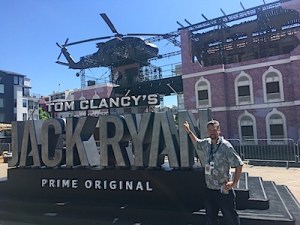 Last week I attended San Diego Comic-Con to be a mentor at the Game Creator Connection, an event in which game industry professionals give advice to other game developers and those wanting to break into the industry. Although I have been a life-long fan of fantasy and science fiction, it was my first time visiting Comic-Con since I was in my twenties, when it was a modest-sized comic book convention with several hundred attendees. I was almost overwhelmed by how large this convention, now celebrating a colorful swath of popular culture, had become, with attendance in excess of one hundred thousand fans.
All of these fans showed up for five days of immersion in their favorite fandoms – intellectual immersion by listening to panels of content creators, tactile immersion by the souvenirs and other themed merchandise offered on the dealer floor, and narrative immersion offered by those who cosplay as their favorite characters. Content producers know that Comic-con attendees are the best customers and greatest evangelists for their products, as well as the power of immersion to get people excited and engaged. So movie and television studios spent megabucks not just on advertising at Comic-Con, but fully immersive escape rooms, where participants entered and solved themed puzzles for finding the way to exit the room.
 The most impressive of these immersive promotional experiences at Comic-Con was Jack-Ryan: The Experience, a 60,000 square foot outdoor facility to promote Amazon Prime Video’s new web television series based on techno-thriller author Tom Clancy’s CIA analyst turned operative, played alternately by Alec Baldwin, Harrison Ford, and Ben Affleck in the movies, and now on television by John Krasinski (best known for playing Jim on The Office).
 My immersion began in the line outside the facility, where I was handed a newspaper with the headline “San Diego Invaded!” along with a Jack Ryan branded water bottle and pretzels as I waited in a camouflage-covered line leading to a series of kiosks for entering my name and email address (along with a consent form to sign, indemnifying Amazon from any legal blame for injuries I might receive from my black ops training). The kiosk camera then took my picture, and after a few seconds, the personnel handed me my “Analyst” photo id on a Jack Ryan branded lanyard for admittance into the facility.
Once inside the facility, set in Yemen despite the San Diego “invasion”, I made my way to the Dark Ops Escape Room, where participants receive their first field assignment: uncovering an double-crossing extremist conspiracy and obtaining classified intelligence. Created by digital agency AKQA and London-based interactive production company Unit 9, this escape room features live actors, voice technology and immersive set pieces. Unfortunately, the line to get in was too long for my patience, and so I investigated the bazaar next door.
 After scoping out these Middle Eastern shopping stalls for more refreshments such as fruit and ice cream as well as a bag of Jack Ryan swag, which you received by inserting your Analyst id into a kiosk and answering a marketing survey. However, I discovered that actor stationed in the stall had mini-quests for us neophyte CIA analyst to complete, such as memorizing intelligence information or doing photo surveillance of another actor in the clever disguise of wearing a hat topped with a pineapple.
Immersive play doesn’t necessarily involve fulfilling quests or solving puzzles; just being in a novel environment and sharing it with your friends can be fun who don’t’ have the energy for playing games. Many visitors enjoyed simply taking selfies inside the stalls, while one stall featured a booth in which I was photographed against a green screen and then emailed a photograph with a Jack Ryan themed background, which I was encouraged to share on Instagram with the hashtag #JackRyan. Well, I’m not so easily swayed into participating in propaganda campaigns – so I shared it with my Facebook friends instead. Take that, terrorists!
 After getting an ice cream from a Yemen shopkeeper who knew refreshment what visitors to a desert environment would most appreciate, I sat in a shaded pavilion and watched participants going through the most exciting part of the Jack Ryan Experience: 4D experience in which participants undertake a training mission inspired by the series pilot episode. While wearing virtual reality gear but using physical props and sets, they run up three flights of stairs to board a helicopter, which takes them to a Yemen high-rise rooftop. Once there, they repel into the building, fight off a group of terrorists, zip line down to the ground, and escape in a jeep to a safe house. I was impressed with how elaborate this promotional activity was, and how the combination of the physical and virtual made it exceptionally immersive for players.
As I was watching this thrilling experience, I ran into former IGDA Director Kate Edwards, who had invited me to participate in the Game Creator Connection, and fellow mentor Vlad Micu. When I told them that I would love the take the “training exercise” myself, Vlad kindly introduced me to his friend Laurens de Gier, a Unity developer at MediaMonks, the Netherlands digital production company that had created this VR training mission. Lauren explained to me that they had only four months to create the training mission part of the Jack Ryan Experience, which included participants wearing a very light HP Omen X VR backpack connected to an Oculus headset, as well as hand and foot sensors for tracking their movements throughout the mission using an OptiTrack system. Based on everything I had heard about the experience, MediaMonks did an exceptional job with the technology.
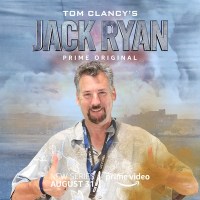 Laurens tried valiantly to get me VIP access to the training mission, but alas, the line was capped, as people had been waiting since 5:30 that morning to try it out. So, I maintained my low-key cover and continued to work the bazaar instead. Still, the role-playing and swag I received was fun and did the trick in turning me into a new recruit for the Central Intelligence Agency: on August 31, I’ll be continuing the immersion by watching the pilot episode of Tom Clancy’s Jack Ryan on Amazon Prime.





 David Mullich