Category Archives: Game Design
How Game Themes Create Engagement and Expectations
 I love going to Disneyland. It’s not for the rides per se; there are more thrilling rides at other amusement parks. It’s for the theming. The architecture, the rides, even the trash cans are so well themed to each of the lands — Fantasyland, Tomorrowland, Frontierland, New Orleans Square, Toontown, and Main Street — that going to the world’s first theme park is a truly immersive experience. I can only hope to create experiences that are a fraction as well-themed as the Disneyland experience.
A game’s theme is the setting, character or story used by a game to provide extra meaning to the player’s decisions and actions. A game’s setting (e.g., the old west, a fantasy world, or World War II) is perhaps the most common method for theming a game. However, some games are themed primarily through use of a well-known character (particularly if the game has many settings or an ill-defined setting) or through the use of the story from a licensed novel or movie (particularly if it uses characters or story lines from the licensed work and not just the setting).
For example, here are three games and the themes they use:
| Game | Theme | Type |
| Battleship | Naval Warfare | Setting |
| Mario Party | Mario | Character |
| Knights of the Old Republic | Star Wars | Story |
It is not necessary for every game to have a theme. Some games, like Checkers, don’t have themes. Such games are called abstract games.
However, adding a theme to your game can have several advantages:
- It can help engage a player. For example, I like Sherlock Holmes stories, so game with a Victorian England theme will be more likely to capture my interest than, say, a game set in Tsarist Russia.
- It can make the game easier to learn. For example, I already understand what a soldier does and the importance of the objectives when I play Call of Duty.
- It can help to add fantasy (or alternatively, reality) and narrative to a game for players who enjoy that kind of play value.
Themes can also create expectations. Such expectations can create unwritten rules for how a player or designer thinks a game “should” be played based on the experiences the player has had with the theme in other games, movies or novels. So, theming can be a double-edged sword.
Curiously, as much exposure as we have to theming in our culture, themes seem to be the hardest game concept for my game students to grasp, whether they are young scouts in my Game Design Merit Badge workshops or they are the college students I teach at The Los Angeles Film School. Even after I explain the meaning of the word theme and give examples of themes in games well-known games, students typically confuse theme with genre (e.g., first-person shooter or real-time strategy) or with literary themes (e.g., good vs. evil, man against nature, will to survive, power and corruption and so on).
I’m not sure why this is. Perhaps it is because gamers are so used to being immersed in their games, they cannot separate the theming from the other elements — which is good for players, but not so much for game designers, who need to be able to break a game down to understand what makes it fun to play.
The Mechanics of Game Genres
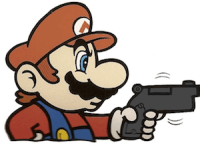 Game genres are very different from literary or film genres. Genres from traditional genres are based on either how they make the audience or reader feel — drama, comedy, romance, thriller, horror — or upon the story’s setting — western, war, crime, science fiction, fantasy. Game genres, however, are based upon the mechanics, that is, the actions that a player takes in the game.
Consider these popular genres and their associated player actions:
| Genre | Action(s) |
| Adventure | Explore, collect information, solve puzzles |
| Fighting | Fight to score points |
| First-Person Shooter | Run and shoot |
| Platformer | Jump from platform to platform |
| Racing | Drive vehicle faster than other drives |
| Real-time Strategy | Explore, build and fight |
| Role-playing game | Fight and use other skills to improve abilities |
Note that the game’s tone and setting doesn’t matter. A first-person shooter is a first-person shooter so long as you run and gun. It doesn’t matter whether it is funny, suspenseful or scary, not does it matter whether it is set in a medieval dungeon or on the Moon. Games are about what the player does.
Genres also determines the balance between whether the game challenges the player’s physical (action) or mental (strategy) skills, as well as the balance between conflict and exploration.
| Action | Strategy | |
| Fighter | Real-Time Strategy | |
| Platformer | Adventure |
When developing a new concept for a game, once pitfall you can avoid is to come up with the game’s genre first. Starting with a genre may tend to lock you into the expected game mechanics for the genre rather than creating innovative gameplay. If making your game stand out from the other games is your goal, start first with the player experience you want to have, develop mechanics to create that experience, and then classify it with the most fitting genre. A genre should be a descriptor, not a starting point.
Another pitfall that many other first-time game designers run into is trying to be innovative by combining genres. Mixing game genres and other elements is a risky proposition until your game design skills are sufficiently developed to understand all the strengths, weaknesses, and other attributes of these elements first. Become an expert in two genres before you decide to mash them together.






 David Mullich