Author Archives: David Mullich
My First Video Game
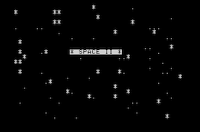 The first game I ever made professionally was a sequel to a text-based role-playing game for the Apple II personal computer called Space, which in turn was inspired by a science fiction pen-and-paper RPG called Traveller. The year was 1979, and I was working as a clerk at Rainbow Computing, a small computer store owned by a couple of my professors at California State University, Northridge, where I was a Computer Science major. One of our regular customers, Sherwin Steffin, had recently been laid off from UCLA’s Educational Media department, and he had decided to start his own company, Edu-Ware, to publish educational software.
However, he and his partner, a UCLA student named Steve Pederson, also published some games. The two used their Space RPG to convince Rainbow Computing to provide Pederson with an Apple II computer in exchange for receiving product at cost. When Pederson and Steffin learned that Rainbow had announced Space in its mail order catalog before the game was completed, the two spent twenty-four straight hours debugging the game without the benefit of Edu-Ware even owning a printer at the time.
When the game turned out to be successful, Steffin asked me if I’d be interested in designing and programming a sequel to it. Of course, I jumped at the chance. I had played a bit of Dungeons & Dragons, both the official version and a simplified version created by some of my college friends, and that had informed much of my initial knowledge about game design.
As for the programming, personal computer games of that era were either programmed the version of BASIC (Beginner’s All-purpose Symbolic Instruction Code) that came with the computer, or assembly language, which the computer’s operating system was written in. I had learned both BASIC and assembly language programming in my college courses, so I already had the knowledge I needed to program the game.
My early ambitions in the game industry was to create games that offered more than entertainment value. I wanted to also either teach players something new or provide them with different insights, just as my favorite novels did. So, for this sequel, I created two additional scenarios for the player’s Space characters.
- Shaman: Characters launch their career as a religious practitioner who is tasked with building a cult on a new world, using an all-terrain vehicle to travel across the planet and accumulate followers. I based this scenario on material from an anthropology class I had taken.
- Psychodelia: Characters experiment with mind-altering drugs, which may boost or retard various traits, which is the only way they can be altered once a character leaves military service. This was my commentary about the risk of taking drugs, which some of my acquaintances experimented with.
Actually, I saw my entire design as an exercise in risk-benefit analysis, as the player’s character is presented with dangerous options throughout the game, and the player must determine whether the potential rewards are worth the possible risks.
I programmed both scenarios in a two week period, in between my college studies. I don’t recall how well the game sold, but I recall receiving about two hundred dollars in royalty payments, which seemed at the time like a fortune.
Both games in the series were well-reviewed in the gaming press, with my sequel receiving an A- rating from Peelings magazine, and the games were notable for not only being one of the first science fiction RPG’s to appear on personal computers, but also for providing a level of realism not found in other games of the time.
Unfortunately, the Space saga was not without its upheavals. Did I say earlier that the original Space was inspired by Traveller? Well, the truth was, the game used the exact same mechanics for character generation that Traveller did. In fact, the games were so close that Traveller‘s publisher, Game Designers Workshop, sued Edu-Ware for copyright infringement. The case was eventually settled out of court, with Edu-Ware agreeing to stop selling the two games.
By that time, I had graduated college and was a full-time employee for Edu-Ware. One of my first tasks was to write an all-new science fiction role-playing game, but this time in graphics instead of text. I reworked some of the scenarios from the original Space games, but created my own character generation system as well as a graphics engine.
This new RPG series was called Empire, and the first in the trilogy of games, World Builders, which took me three months to design and program, won Electronic Games magazine’s award for Best Science Fiction/Fantasy Game of 1983.
How Can Game Developers Protect Their Ideas?
 Many of my students — in fact, just about everyone who is thinking about or just getting in to game development — have some concern that their great ideas are going to get stolen by other game developers. So, what can you do to protect your ideas? Well, the answer is, you can’t. Ideas, as the saying goes, are a dime a dozen. They aren’t fully formed creative works and therefore aren’t offered intellectual property protection in the legal system.
Once your idea is actually implemented as a creative work or combination of creative works (as is the case with a video game), copyright is your protection against another developer using your code, artwork, audio, and story. You work is automatically copyrighted as soon as you create it, although you can gain additional protection by registering it with the U.S. Copyright Office (if you are a United States citizen, of course, but other countries have their own copyright office).
If you come up with an innovative game design, there is also the possibility of patenting it (such as are the rules for Magic: The Gathering which are patented). Patenting game rules does offer protection against other developers making a game having gameplay too similar to yours. However, that means that your game must have gameplay that is innovative and not similar to any game that came before it.
But protecting your idea or concept? A concept — that is, an idea that can be summed up in a few words or sentences — cannot be protected legally. It’s too easy to come up with an idea, and most ideas are really just variations of existing ideas. If you come up with an idea for Rocks vs. Vampires game in which you protect your house against invading vampires by putting together a rock garden, there is nothing preventing another developer from making a similar game, so long as they don’t use your exact code and assets. Nor can the makers of Plants vs. Zombies sue you (at least not successfully) just because your game was inspired by theirs.
So, don’t worry about people copying you. They will, and you will copy others, even if you don’t intend to. Instead, just be concerned about making a good game — a game distinguishes itself from the competition and the copycats. The unique vision and level of quality that you bring to your game’s design, programming, art, and audio, is your best insurance that players will choose to buy your game over a similar game.






 David Mullich