Author Archives: David Mullich
How Halloween Influenced My Career In Game Development
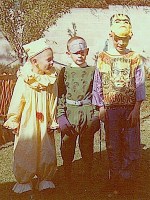 Halloween has always been my favorite holiday, even more so than Christmas. As a child I loved dressing up in costume and going trick-or-treating. It wasn’t so much the collecting candy that I enjoyed but going out at night and visiting unfamiliar houses, which were made even more foreboding with cobwebs, skeletons, and graveyards on the lawn. It felt like I was doing something dangerous, and trick-or-treating was about as dangerous a think that this straight-and-narrow kid during his middle-class, suburban childhood.
Since I couldn’t walk amongst vampires, werewolves, and mummies every day, I developed an interest in the Universal Monster horror film franchise and watched the ghoulish adventures of Frankenstein, Dracula, and my favorite, the Wolf Man. I begged my mom to let me stay up past midnight on Saturday nights to watch a late night horror film show on a local television program, and that introduced me to zombies, demons and other supernatural creatures. Later on, as a teenager, I’d go to the movie theater with friends to watch films coming out of the new slasher horror film genre: Halloween, Friday the 13th, and A Nightmare On Elmstreet.
Of course, it wasn’t enough to be a member of the audience, I had to be an active participant in the horror genre. No, I didn’t become a serial killer, but I did buy myself a Ouija board for contacting the Other Side and tried to hold seances. When no one from the Other Side showed up, I built haunted house attractions in my garage and charged them a quarter to pull them on a wagon through scenes of bubbling cauldrons and simulated horror.
Eventually I moved on to college and discovered how a computer could be used for a storytelling medium. What a perfect way to tell a horror story, I thought! A computer was able to create an environment that was both immersive and surprising, yet do it in a way that was completely safe. What better way to lure in my unsuspecting victims?!
 Unfortunately, fantasy and science fiction were the favored genres for video games, not horror. When I joined The Walt Disney Company as a game producer, I wanted to produce a video game based on my favorite Disneyland ride, The Haunted Mansion. However, it was a tough sell. Instead of recreating the “frightfully funny” experience of the ride, I wanted to explore ways to make a computer game actually frightening, just as I had experimented with my earlier game The Prisoner in making players feel trapped and manipulated. But Disney wasn’t willing to take such risks at that time — especially not with one of their more cherished attractions, and I was never able to get the project beyond the talking stage with developers.
 I found a more receptive employer for my more macabre ideas when I joined Cyberdreams, a small game publisher specializing in game developed in collaboration with famous names from the science fiction, fantasy, and horror genres. One of my first projects was to produce a sequel to the award-winning horror game Dark Seed, based on the artwork of H.R. Giger. I put together a Dream Team of horror writers: Raymond Benson, who had designed Stephen King’s The Mist for MicroProse; Keith Herber, who had written scenarios for the H.P. Lovecraft horror RPG Call of Cthulhu (which I played quite extensively while I was at Disney) to write dialog; and horror novelist John Shirley to critique the story, which chronicled protagonist Mike Dawson’s descent into madness as he crosses from our normal world to the Giger-inspired Dark World. Alas, the game turned out to be less than the sum of its parts, and it received mediocre reviews.
 Much more successful was another game that I produced at the same time, I Have No Mouth, And I Must Scream, based on Harlan Ellison’s classic short story about the last five people on Earth, kept alive and psychologically tortured by a malevolent, all-power computer. We embellish the short story by telling the backstory of each of the characters, each about such horrific topics as cannibalism, physical abuse, rape, and the Holocaust. This game was a mishmash of science fiction, fantasy, and horror genres, but it all came together somehow and went on to win many awards.
 I thought I would have similar luck when we signed a deal with Wes Craven, director of A Nightmare on Elm Street, Scream, and other horror films. He provided us with a scenario about a house that came alive, but being a very busy person, allowed us to take the concept from there. I got as far as producing a prototype of the game to show at the 1997 Game Developers Conference, but even though it won About Games magazine’s Bronze Medal for Interactive Fiction, Craven’s agent was not impressed and she cancelled the project.
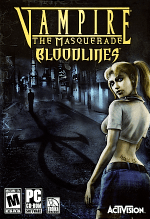 My greatest success in the horror genre came when I joined Activision, and I was assigned to produce the in-progress development of Vampire: The Masquerade – Bloodlines. The developer, Troika Games, was behind schedule since they were using Valve’s Source Engine, which was still in development. I managed to get the game on track, but it was so overdue that we run out of funding when it still needed a couple more weeks of polishing. Fortunately, the fans took over with mods to fix some of the problems after it was launched, and the horror game has since been recognized as one of the best computer RPG’s of all time.
Still, I haven’t felt I had a chance to fully experiment with how to best design a game to create a frightening experience, as all of the games I produced relied more on a horrifying premise for telling their story. Perhaps some day I’ll be given a chance to develop game mechanics that create the sensation of fear. After all, the night is still young.
How Even A Value-Priced Game Can Be Of High Quality
 On Saturday evening, as we were driving back home from an art festival where my wife had sold her artwork, we picked up some fast food because we were too tired to cook dinner. We decided to go to McDonald’s because my wife likes their Southwest Grilled Chicken Salad. Bad decision! Although there were only three cars ahead of us in the drive-thru, it was ten minutes from the time we ordered until we drove up to the pick-up window, which unfortunately has not been unusual of late at this particular McDonald’s location. Once we arrived at the window, the employee then asked us to pull up into a waiting area because it would be another five or ten minutes until the salad was ready. Our food actually came about three minutes later, but before driving away I asked my wife to double-check her salad because the last two times I picked one up for her, either there was no chicken in the salad or they gave us a Bacon Ranch Chicken Salad instead.
Meanwhile, the In-N-Out Burger across the street had a line of about ten cars in the drive-thru, but it managed to deliver each car’s order quickly. How I wish we had gone there instead! In-N-Out has never messed up my order, and their food is always delicious, and with each bite I appreciate how their food is made from fresh ingredients, just as they advertise — unlike my similarly priced McDonald’s burger, which was greasy and bland tasting. There is a substantial difference in quality, both with the service and the product, of the two establishments, and for in my experience, In-N-Out has the highest quality fast-food experience around.
That’s not to say that In-N-Out is the finest dining experience I’ve ever had. I’ve been lucky enough to eat at many fine restaurants around the world, and the best eating experience of my life was a week my wife and I spent in New Orléans, a highlight of the trip being dinner at the Commander’s Palace, which has been listed by some restaurant critics as one of the best restaurants in the America for its exquisite haute Creole cuisine.
Both In-N-Out and Commander’s Palace serve high quality food, but the difference between them is properly called grade. In project management, the term “grade” represents a level or ranking system which can be used to differentiate between items that serve the same essential function, but have different attributes which result in different standards of quality output. Thus, in the food industry, fast-food restaurants are low grade while fine dining restaurants are high-grade; in retail merchandising, Wal Mart is a lower grade than Nordstrom’s; and in video games, value-priced games are a lower grade than AAA games.
The grade of a product or service largely determines its price. That’s why I will spend less than $10 for a meal at In-N-Out and more than $100 for a meal at Commander’s Palace. Similarly, a value-priced game is sold for lest than $20, while a AAA game is typically priced at $60 or more.
However, a high-grade game still can be of low quality: haven’t you played a AAA game where you found the gameplay to be unengaging, the code to be buggy, or the customer service to be poor? Conversely, a low-grade game like Angry Birds or Plants and Zombies can be of very high quality.
The moral of the story: don’t think that because you are developing a casual game, advertgame, or value-priced game that you can’t produce a game of quality. Here are some basic tips to follow:
- Clearly identify who your target players are and what they looking for in a game.
- Study the competition and determine what can make your game stand out.
- Define the player experience that will appeal to your target players and stand out from the competition.
- Manage your game’s scope to ensure that it doesn’t go beyond the limits of your budget, schedule, or team’s capabilities.
- Continually playtest your game with some of your target players and continually iterate until you achieve the desired player experience.
- Bug test your game with quality assurance testers who are not part of your team, and use them to verify that bugs have actually been fixed.
- Make sure that your marketing materials convey the actual player experience without over-promising.
- Listen to your customers and follow up on the problems they report.
If you take pride in your work and aim to be the In-N-Out of your game niche, you can have customer lined up around the block too.






 David Mullich